Ecological Transition Zone
by Brianna Deleon - class of 2027
Introduction
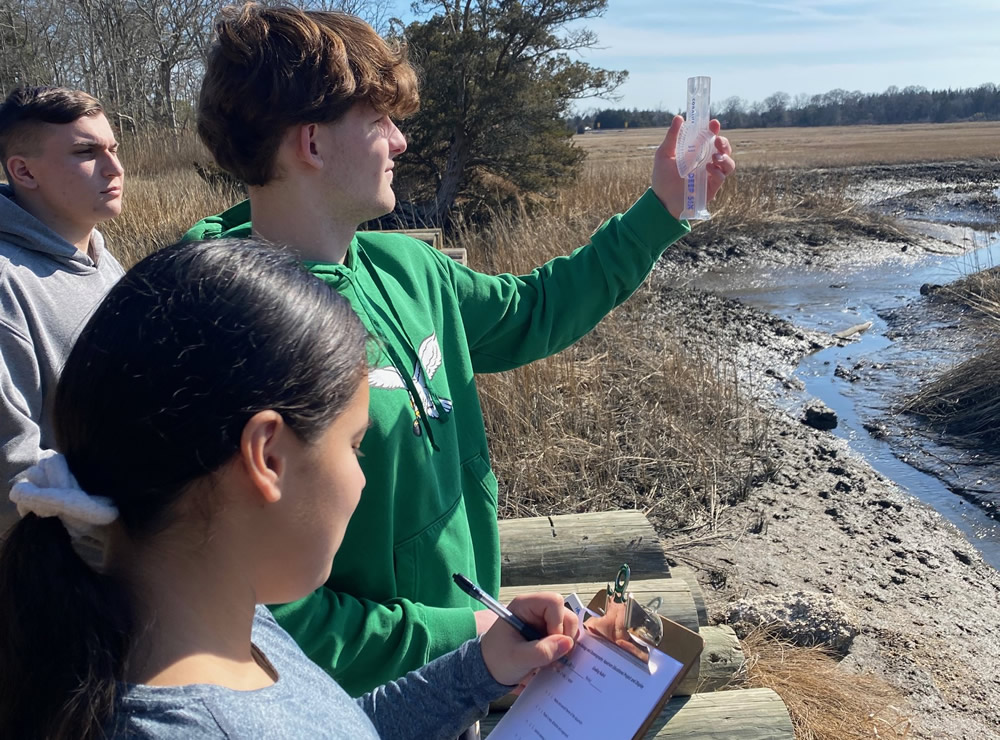
The ecological transition zone along the nature trail shows how ecosystems gradually change and connect over time. Visitors can observe the shift from a coastal hardwood forest to a ghost forest and salt marsh, demonstrating the effects of rising sea levels and environmental change. Along the trail, differences in plant life, water levels, soil moisture, and biodiversity can be seen within each habitat.
Main Explanation
Ecological Transition zones, like riparian zones, are protected areas between land and water found around streams, lakes, and rivers. They are important because they help filter water, reduce flooding and erosion, and provide habitats for many plants and animals. These zones connect local land and water ecosystems by supporting biodiversity and regulating water flow and nutrients. However, climate change affects them through flooding, coastal erosion, saltwater intrusion, and pollution caused by rising sea levels and stronger storms.
Fun or interesting facts
- Riparian zones are often filled with trees, shrubs, and smaller plants
- Riparian zones help support wildlife, improve water quality, and reduce erosion
- Floodplain zones help store extra water when rivers overflow their banks
- Floodplain zones help reduce flood damage and support wildlife habitats.
Conclusion
Conservation is important because it helps protect natural habitats, wildlife, and resources for future generations. Protecting the environment reduces pollution, supports biodiversity, and helps ecosystems stay healthy and balanced. Small actions like reducing waste, conserving water, and protecting natural areas can make a positive impact, especially in protecting ecological transition zones and the ecosystems they support.
References
- “Hold the Line on New Jersey’s REAL Rules - New Jersey Conservation Foundation.” New Jersey Conservation Foundation, 10 Apr. 2026, www.njconservation.org/nj-real-rules-2026/.
- “Riparian and Floodplain Zones | State Wildlife Action Plan.” State Wildlife Action Plan, 19 Nov. 2025, dep.nj.gov/swap/habitats/riparian-and-floodplain-zones/.
- “NJDEP| Watershed & Land Management | Frequently Asked Questions.” Watershed & Land Management, 6 Aug. 2024, dep.nj.gov/wlm/lrp/faq/.
- “NJDEP-Division of Water Monitoring and Standards.” Www.nj.gov, www.nj.gov/dep/wms/bears/assessment-report20182020.html.
|